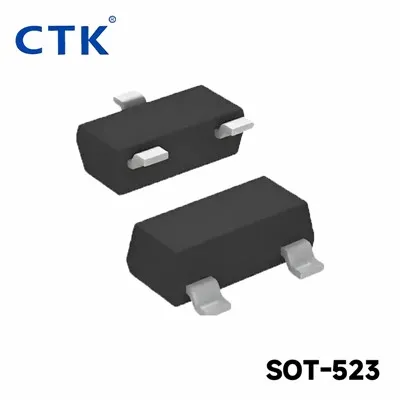


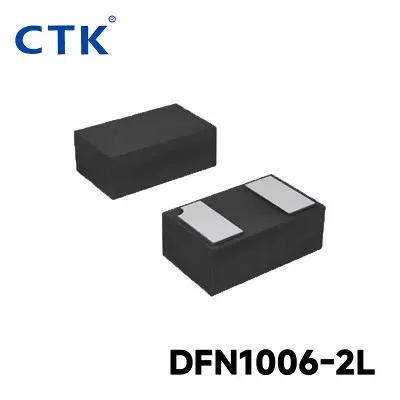




In the realm of electronic components, DIODE SMC Fast Recovery Diodes Surface Mount Superfast Recovery Rectifiers play a crucial role in various applications. These diodes are designed to quickly switch from the conducting state to the non - conducting state, making them ideal for high - speed rectification tasks. One of the key parameters that can significantly impact their performance is the reverse leakage current.
Understanding Reverse Leakage Current
Reverse leakage current, denoted as (I_{R}), is the small amount of current that flows through a diode when it is reverse - biased. In an ideal diode, no current would flow in the reverse direction. However, in real - world diodes, there is always a tiny amount of current due to the movement of minority carriers across the p - n junction.
The reverse leakage current is affected by several factors. Temperature is one of the most significant ones. As the temperature increases, the reverse leakage current also increases exponentially. This is because at higher temperatures, more electron - hole pairs are generated, increasing the number of minority carriers available to contribute to the reverse current. Another factor is the reverse bias voltage. As the reverse bias voltage applied to the diode increases, the reverse leakage current also tends to increase, although the relationship is not as straightforward as with temperature.
Impact on Diode Performance
Power Dissipation
One of the most direct impacts of reverse leakage current on DIODE SMC Fast Recovery Diodes is power dissipation. Power dissipation ((P)) in a diode is given by the product of the reverse voltage ((V_{R})) and the reverse leakage current ((I_{R})), i.e., (P = V_{R}\times I_{R}). A higher reverse leakage current means more power is dissipated in the diode, even when it is supposed to be in the non - conducting state. This can lead to increased heat generation, which in turn can affect the reliability and lifespan of the diode. Excessive heat can cause the diode to degrade over time, leading to a decrease in its performance and eventually failure.

Efficiency
In power rectification applications, efficiency is of utmost importance. A high reverse leakage current reduces the efficiency of the rectifier circuit. Consider a simple half - wave rectifier circuit. During the reverse - biased half - cycle, the power lost due to the reverse leakage current is wasted energy. This wasted energy not only reduces the overall efficiency of the circuit but also can cause the power supply to operate at a lower capacity than expected. For example, in a power supply that is designed to deliver a certain amount of power to a load, the power lost due to reverse leakage current means that less power is available for the load, resulting in a less efficient system.
Switching Speed
DIODE SMC Fast Recovery Diodes are known for their fast switching speeds. However, a high reverse leakage current can slow down the switching process. When the diode is switching from the conducting state to the non - conducting state, the presence of a significant reverse leakage current means that there are still some carriers flowing across the junction. This can delay the complete turn - off of the diode, reducing its switching speed. In high - speed applications, such as in switching power supplies or high - frequency inverters, even a small delay in the switching speed can have a significant impact on the overall performance of the circuit.
Signal Integrity
In applications where the diode is used for signal rectification, a high reverse leakage current can degrade the signal integrity. For example, in a radio frequency (RF) circuit, the reverse leakage current can cause unwanted noise and distortion in the rectified signal. This can lead to errors in the signal processing and reduce the quality of the output.
Mitigating the Effects of Reverse Leakage Current
Temperature Management
Since temperature has a significant impact on reverse leakage current, proper temperature management is crucial. This can be achieved through the use of heat sinks, fans, or other cooling mechanisms. By keeping the diode at a lower temperature, the reverse leakage current can be reduced, improving the performance and reliability of the diode.
Selecting the Right Diode
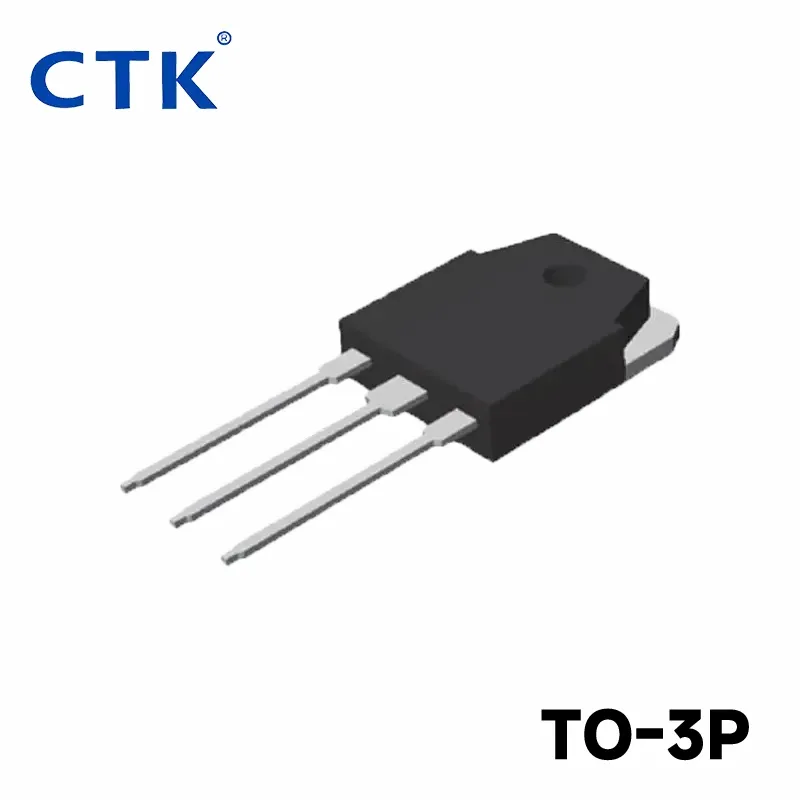
As a DIODE SMC Fast Recovery Diodes Surface Mount Superfast Recovery Rectifier supplier, we offer a wide range of diodes with different specifications. When selecting a diode for a particular application, it is important to consider the reverse leakage current requirements. Some diodes are designed to have lower reverse leakage currents than others. For example, our TO - 247 Fast Recovery Diodes and TO - 3P Fast Recovery Diodes are engineered to provide low reverse leakage currents, making them suitable for applications where power dissipation and efficiency are critical.
Circuit Design
Proper circuit design can also help mitigate the effects of reverse leakage current. For example, adding a bypass capacitor in parallel with the diode can help reduce the impact of the reverse leakage current on the circuit. The capacitor can store and release energy, reducing the power lost due to the reverse leakage current.
Applications and Considerations
Power Supplies
In power supply applications, DIODE SMC Fast Recovery Diodes are used for rectifying the AC input to DC output. A high reverse leakage current can reduce the efficiency of the power supply and cause overheating. Therefore, when designing a power supply, it is important to select diodes with low reverse leakage currents. Our SMB Fast Recovery Diodes for High - Speed Rectification are a great choice for power supply applications, as they offer fast recovery times and low reverse leakage currents.
Motor Drives
In motor drive circuits, these diodes are used to protect the semiconductor switches from reverse voltage spikes. A high reverse leakage current can cause the diodes to dissipate more power, leading to overheating and potential failure. Our SMA Fast Recovery Diodes for Reliable Power Rectification are well - suited for motor drive applications, providing reliable performance and low reverse leakage currents.
Compact Electronics
In compact electronic devices, such as mobile phones and tablets, space is a premium. Our SOD - 123FL Fast Recovery Diodes for Compact Rectification are designed to have a small form factor while still offering low reverse leakage currents. This makes them ideal for use in these types of applications.
Conclusion
Reverse leakage current is a critical parameter that can have a significant impact on the performance of DIODE SMC Fast Recovery Diodes Surface Mount Superfast Recovery Rectifiers. It affects power dissipation, efficiency, switching speed, and signal integrity. As a supplier, we understand the importance of providing high - quality diodes with low reverse leakage currents. Our wide range of products, including TO - 247 Fast Recovery Diodes, TO - 3P Fast Recovery Diodes, SMB Fast Recovery Diodes for High - Speed Rectification, SMA Fast Recovery Diodes for Reliable Power Rectification, and SOD - 123FL Fast Recovery Diodes for Compact Rectification, are designed to meet the diverse needs of our customers.
If you are in the market for high - quality DIODE SMC Fast Recovery Diodes Surface Mount Superfast Recovery Rectifiers, we invite you to contact us for a detailed discussion on your requirements. Our team of experts is ready to assist you in selecting the right diodes for your applications.
References
- Streetman, B. G., & Banerjee, S. (2000). Solid State Electronic Devices. Prentice Hall.
- Millman, J., & Grabel, A. (1987). Microelectronics. McGraw - Hill.