





Are DIODE SOD - 323 Zener Diodes for compact voltage control available in different voltage ratings?
As a supplier of DIODE SOD - 323 Zener Diodes for compact voltage control, I frequently encounter inquiries about the availability of these diodes in different voltage ratings. This blog post aims to comprehensively answer this question and provide detailed information about these crucial electronic components.
Understanding Zener Diodes and Their Role in Voltage Control
Zener diodes are a special type of diode designed to operate in the reverse - breakdown region. Unlike normal diodes, which are mainly used for rectification (converting alternating current to direct current), Zener diodes are employed for voltage regulation. When a Zener diode is reverse - biased and the reverse voltage reaches the Zener voltage (Vz), the diode starts to conduct current in the reverse direction, and the voltage across it remains relatively constant. This property makes Zener diodes ideal for maintaining a stable voltage level in a circuit, regardless of variations in the input voltage or changes in the load current.
The DIODE SOD - 323 Zener diodes, in particular, are known for their compact size. The SOD - 323 package is a surface - mount device (SMD) package that takes up very little board space, making it suitable for applications where space is at a premium, such as in portable electronics, mobile devices, and miniaturized circuit boards.
Availability of Different Voltage Ratings
The answer to the question of whether DIODE SOD - 323 Zener diodes for compact voltage control are available in different voltage ratings is a resounding yes. In fact, these diodes are manufactured with a wide range of Zener voltages to meet the diverse requirements of various electronic circuits.
From low - voltage applications, such as those requiring a stable 1.8V or 2.4V for powering small - scale integrated circuits, to higher - voltage applications where a Zener voltage of 15V, 20V, or even more is needed for protecting against voltage spikes, DIODE SOD - 323 Zener diodes are available in multiple standard voltage ratings.
The range of available voltage ratings varies from manufacturer to manufacturer, but typically, you can find Zener voltages starting from around 1.8V and going up to 75V or higher. This wide selection allows designers and engineers to choose the exact Zener voltage that suits their specific circuit design needs.
Importance of Different Voltage Ratings
The availability of DIODE SOD - 323 Zener diodes in different voltage ratings is of utmost importance for several reasons.
1. Circuit Design Flexibility
In modern electronics, there is a vast array of circuit designs, each with its own specific voltage requirements. For example, in a smartphone, different components such as the microprocessor, memory chips, and display may require different stable voltage levels for proper operation. By having access to Zener diodes with different voltage ratings, circuit designers can easily tailor the voltage regulation in each part of the circuit to meet the exact needs of the components.
2. Voltage Protection
Zener diodes are often used for over - voltage protection in electronic circuits. Different circuits may be exposed to different levels of potential over - voltages. For instance, a circuit connected to a power supply with a relatively high output may need a Zener diode with a higher voltage rating to protect against large voltage spikes. On the other hand, a low - voltage circuit may only require a Zener diode with a lower voltage rating for protection.
3. Compatibility with Other Components
In a complex circuit, Zener diodes need to be compatible with other components in terms of voltage levels. The availability of different voltage ratings ensures that the Zener diode can be integrated seamlessly into the circuit without causing any voltage - related issues with other parts of the circuit.
Comparison with Other Zener Diode Packages
While DIODE SOD - 323 Zener diodes are popular for their compact size, it is also worth comparing them with other Zener diode packages in terms of voltage ratings and applications.


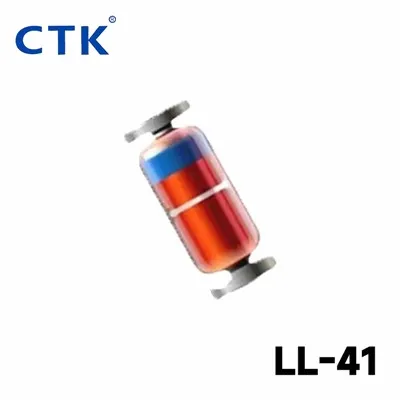
- LL - 41 Silicon Planar Power Zener Diodes: LL - 41 Zener diodes are typically through - hole components. They are often used in applications where higher power handling capabilities are required. They are available in a wide range of voltage ratings, similar to SOD - 323 diodes. However, their larger physical size makes them less suitable for compact circuit designs.
- SOD - 123 Plastic - Encapsulate Zener Diodes: The SOD - 123 package is larger than the SOD - 323 package. SOD - 123 Zener diodes can handle slightly more power than SOD - 323 diodes. They are also available in a variety of voltage ratings and are commonly used in applications where a balance between size and power handling is needed.
- SOD - 523 Plastic - Encapsulate Zener Diodes: The SOD - 523 package is even smaller than the SOD - 323 package. These diodes are suitable for ultra - compact applications. They also come in different voltage ratings, but their power - handling capabilities are relatively limited compared to SOD - 323 and larger packages.
- LL - 34 Zener Diodes: LL - 34 Zener diodes, like LL - 41, are through - hole devices. They are often used in automotive and other high - reliability applications. They offer a wide range of voltage ratings, but their size restricts their use in space - constrained designs.
- SMAF Silicon Planar Zener Diodes: SMAF Zener diodes are surface - mount devices with a relatively large package size compared to SOD - 323. They are designed for higher - power applications and are available in various voltage ratings.
Selecting the Right Voltage Rating
When selecting a DIODE SOD - 323 Zener diode with the appropriate voltage rating, several factors need to be considered.
1. Circuit Requirements
First and foremost, understand the voltage requirements of the circuit. Determine the exact voltage level that needs to be regulated or the over - voltage protection level required. For example, if a circuit component requires a stable 5V supply, a Zener diode with a 5V rating would be a suitable choice.
2. Power Dissipation
The power dissipation capabilities of the Zener diode are also crucial. The power dissipated in a Zener diode (Pz) can be calculated using the formula Pz = Vz * Iz, where Vz is the Zener voltage and Iz is the Zener current. Make sure that the selected Zener diode can handle the power dissipation within the expected operating conditions of the circuit.
3. Tolerance
Zener diodes have a specified tolerance for their voltage ratings. For example, a Zener diode with a 5V rating may have a tolerance of ±5%. Consider the tolerance requirements of the circuit when selecting a Zener diode. In applications where a very precise voltage regulation is needed, diodes with lower tolerances may be required.
Conclusion
In conclusion, DIODE SOD - 323 Zener diodes for compact voltage control are indeed available in different voltage ratings. This availability provides designers and engineers with the flexibility to create efficient and reliable electronic circuits that meet a wide range of voltage requirements. Whether it is for low - voltage, high - precision applications or for protecting circuits against over - voltages, these compact Zener diodes offer a viable solution.
If you are in need of DIODE SOD - 323 Zener diodes for your projects or applications, I encourage you to reach out to discuss your specific requirements. We are committed to providing high - quality Zener diodes with a wide range of voltage ratings to meet your needs. Contact us to start the procurement and negotiation process.
References
- Millman, Jacob, and Christos C. Halkias. Integrated Electronics: Analog and Digital Circuits and Systems. McGraw - Hill, 1972.
- Schilling, David, and Charles Belove. Electronic Circuits: Discrete and Integrated. McGraw - Hill, 1979.