





Hey there! As a supplier of SiC MOSFETs, I've been deep in the world of silicon carbide semiconductor technology for quite some time. One hot topic that always comes up in our discussions with customers and fellow tech enthusiasts is the effect of channel doping concentration on SiC MOSFET threshold voltage. So, I thought I'd share my insights on this in this blog.
Understanding SiC MOSFET Basics
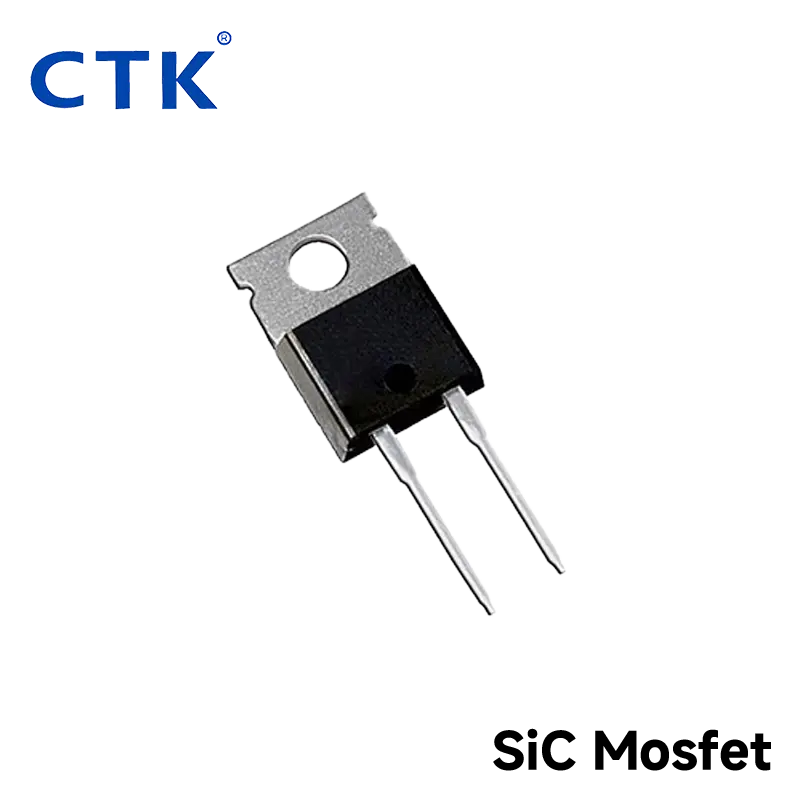
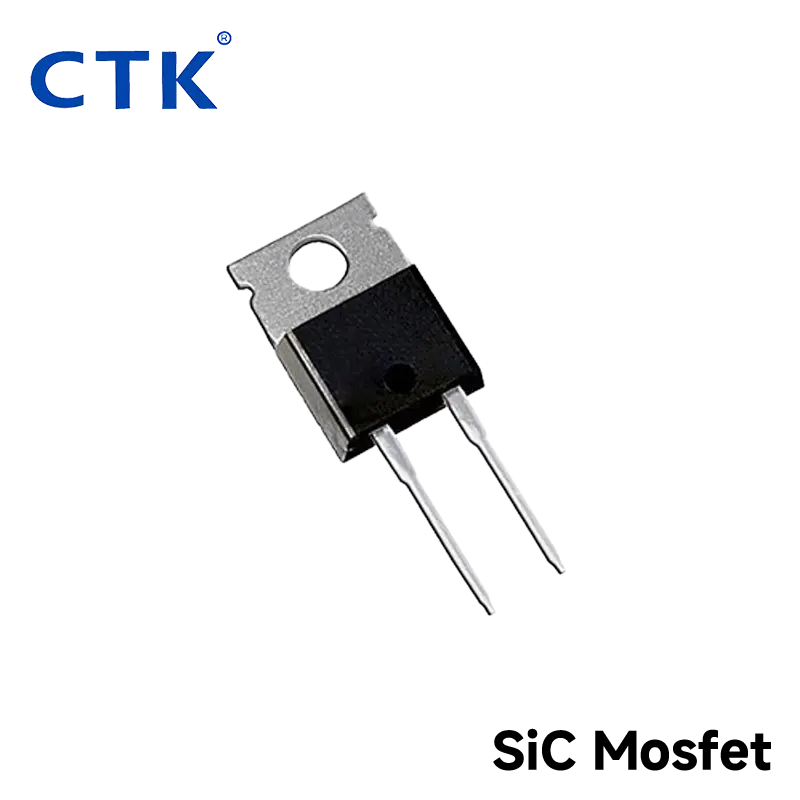
First off, let's quickly go over what a SiC MOSFET is. A SiC MOSFET, or Silicon Carbide Metal - Oxide - Semiconductor Field - Effect Transistor, is a powerhouse in the semiconductor world. You can learn more about it here. Unlike traditional silicon - based MOSFETs, SiC MOSFETs have some amazing properties. Silicon carbide has a wider bandgap, which means it can handle higher voltages, temperatures, and frequencies. This makes them a top choice for applications where efficiency and performance are key, like in electric vehicles, renewable energy systems, and high - power industrial equipment.
The Threshold Voltage: What's That?
The threshold voltage ($V_{th}$) of a MOSFET is a crucial parameter. It's the minimum gate - to - source voltage ($V_{gs}$) required to create an inversion layer in the channel region and allow current to flow between the source and the drain. In simpler terms, it's like the "on" switch of the MOSFET. When $V_{gs}$ is below $V_{th}$, the MOSFET is off, and when $V_{gs}$ is above $V_{th}$, it's on.
A proper understanding of the threshold voltage is essential because it directly impacts the power consumption and switching behavior of the MOSFET. If $V_{th}$ is too low, the MOSFET might turn on accidentally, leading to power losses and potential system malfunctions. On the other hand, if $V_{th}$ is too high, it would require a larger gate - drive voltage to turn the MOSFET on, which can complicate the circuit design and increase power consumption in the gate - drive circuitry.
How Channel Doping Concentration Comes into Play
Now, let's talk about channel doping concentration. Doping is the process of intentionally adding impurities to a semiconductor material to change its electrical properties. In the case of a SiC MOSFET, the channel doping concentration refers to the amount of impurities added to the channel region of the device.
When we increase the channel doping concentration:
- Increased Threshold Voltage: As we add more dopants to the channel, the number of majority carriers (either electrons or holes depending on the type of doping) increases. This makes it harder for the gate electric field to create an inversion layer. More gate voltage is needed to counteract the effect of the dopants and form the conductive channel. So, the threshold voltage goes up. For example, if we have a lightly doped channel, it might be easier for the gate field to induce an inversion layer, resulting in a lower $V_{th}$. But with a heavily doped channel, the gate has to work harder, and thus $V_{th}$ is higher.
- Improved Immunity to Noise: A higher channel doping concentration and the resulting increased threshold voltage can make the MOSFET more immune to noise. Electrical noise in a system can cause small fluctuations in the gate voltage. If the threshold voltage is low, these noise - induced voltage fluctuations could potentially turn the MOSFET on unintentionally. By increasing the threshold voltage through higher channel doping, we can reduce the risk of such false turn - ons.
However, there are also some downsides to increasing the channel doping concentration:
- Higher Sub - Threshold Leakage Current: Although the MOSFET is supposed to be off when $V_{gs}<V_{th}$, there is always a small amount of leakage current flowing through the device, known as the sub - threshold leakage current. At higher channel doping concentrations, the sub - threshold leakage current can increase. This is because the increased number of dopants provides more carriers that can contribute to the leakage current, which can lead to increased power consumption even when the MOSFET is in the off state.
- Reduced Mobility: The mobility of carriers in the channel is an important factor for the performance of the MOSFET. Higher channel doping concentrations can scatter the carriers more, reducing their mobility. This means that the carriers move more slowly through the channel, which can limit the current - driving capability of the MOSFET and increase the on - resistance ($R_{on}$) of the device.
Real - World Implications for Our SiC MOSFETs
As a supplier, we have to carefully balance the channel doping concentration to optimize the threshold voltage of our SiC MOSFETs. For applications that require high - speed switching and low - power consumption, we might aim for a lower threshold voltage. This can be achieved by using a lower channel doping concentration. However, we also need to ensure that the MOSFET is not too sensitive to noise.
On the other hand, for applications where reliability and immunity to noise are more important, such as in some industrial control systems, a higher threshold voltage resulting from a higher channel doping concentration might be more suitable. But we have to be aware of the potential increase in sub - threshold leakage current and decrease in carrier mobility.
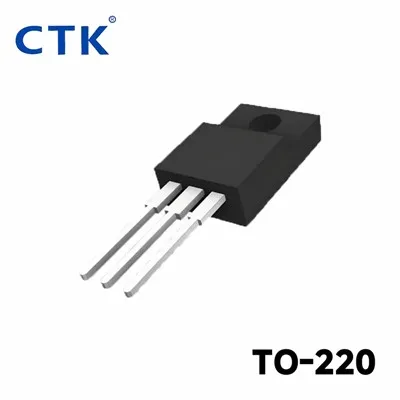
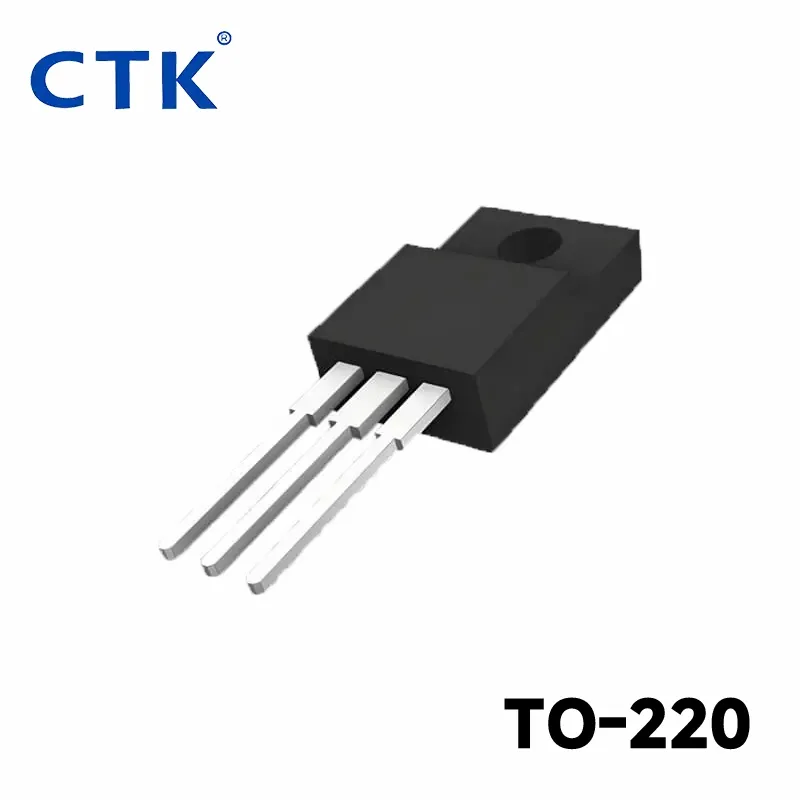
We also offer TO - 220 SiC Diodes - Silicon Carbide Power Diodes for High Efficiency, which can be used in conjunction with our SiC MOSFETs in many power electronics applications. These diodes also benefit from the excellent properties of silicon carbide, such as fast switching speeds and low reverse recovery losses.
Conclusion and Call to Action
In conclusion, the channel doping concentration has a significant impact on the threshold voltage of SiC MOSFETs. It's a delicate balance that we, as a supplier, have to manage to meet the diverse needs of our customers. Whether you're working on an electric vehicle project, a renewable energy system, or any other high - power application, understanding these relationships can help you make the right choice when selecting SiC MOSFETs.
If you're interested in learning more about our SiC MOSFETs or discussing your specific application requirements, we'd love to hear from you. We can provide you with detailed technical specifications and help you choose the best-suited products for your project. Just reach out, and let's start the conversation!
References
- Baliga, B. J. (2005). Fundamentals of Power Semiconductor Devices. Springer.
- Mohan, N., Undeland, T. M., & Robbins, W. P. (2012). Power Electronics: Converters, Applications, and Design. Wiley.