





Hey there, if you’ve ever been deep in a circuit design project—whether you’re a seasoned electronics engineer or just getting your feet wet messing with prototypes—you’ve probably hit a point where you’re staring at a diode spec sheet wondering, “Wait, what even is repetitive peak reverse voltage, and why does it matter for these SMC fast recovery diodes I’m using?” As someone who’s been supplying surface mount superfast recovery rectifiers for years, I get it. That spec isn’t just a random line item—it’s the thing that keeps your diodes from blowing up mid-assembly or failing when you ship your final product. Today, I’m breaking down exactly what repetitive peak reverse voltage (we’ll call it V_RRM from here on, ’cause let’s be real, no one wants to type the full thing every time) is for SMC fast recovery diodes, why it’s different from other voltage specs, and how to pick the right one for your design.
First, let’s start with the basics: what’s a fast recovery diode anyway? These aren’t your grandpa’s regular rectifier diodes. Regular diodes take forever to turn off when you switch them from forward current (the current flowing the “right” way through the diode) to reverse voltage. Fast recovery ones—especially the superfast surface mount SMC ones—do that switch in nanoseconds, which is why they’re used in switching power supplies, motor drives, LED lighting, and all sorts of high-frequency gear. But that speed doesn’t mean you can ignore their voltage limits. That’s where V_RRM comes in.
So, what is V_RRM? Let’s put it in simple terms. When a diode is in reverse bias—meaning the voltage across it is pointing the opposite way from how it lets current flow—there’s a small reverse current (leakage current, we call it I_R) flowing through it. V_RRM is the maximum repetitive reverse voltage you can apply to the diode repeatedly (hence “repetitive”) without it breaking down or getting damaged. The key word here is “repetitive”—this isn’t a one-time surge voltage. That’s a different spec, like peak reverse voltage (V_RM) or transient peak reverse voltage (V_RSM), which are for short, non-recurring surges. V_RRM is for the voltage that cycles on and off with your circuit’s normal operation—like every AC cycle in a power supply, or every switching pulse in an inverter.
Now, why is this extra important for SMC surface mount superfast recovery rectifiers? Surface mount diodes have different thermal characteristics than through-hole ones. Their small size means they dissipate heat more quickly if the current is too high, but they also have less room for error when it comes to voltage. If you pick an SMC diode with a V_RRM that’s too low for your circuit’s reverse voltage, even if it works once, over time that repetitive reverse bias will cause the diode’s leakage current to creep up, and eventually it’ll fail short or open—usually when you least want it to, like during field testing or mass production.
Wait, let’s clarify the difference between V_RRM and other reverse voltage specs because I see this mix-up all the time with new engineers. V_RM is the maximum non-repetitive peak reverse voltage—like a once-off spike that might come from a load dump or a surge. V_RSM is the maximum transient peak reverse current, which is about current, not voltage. V_RRM is the sweet spot for normal, ongoing operation. For example, if your circuit has a 24V AC input, the peak reverse voltage across your diode will be around 34V (24V * sqrt(2)). So you need an SMC fast recovery diode with a V_RRM higher than that—usually at least 50% extra to be safe, so 50V or above.
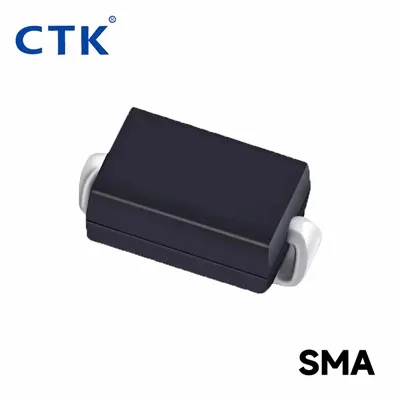
Now, let’s talk about SMC package specifically. The SMC package (also called DO-214AB for you package nerds) is super popular because it’s surface mount, so it saves space on PCBs, and it can handle decent power—up to like 3A or 5A depending on the diode. But not all SMC fast recovery diodes have the same V_RRM. Some are rated for 50V, some for 100V, 200V, even up to 600V for higher-voltage applications. That’s why checking the spec sheet’s V_RRM line is non-negotiable—can’t just grab any SMC diode and hope it works.
Let me throw in a quick example from when I worked with a customer last year. They were designing a 12V switching power supply for a home appliance, and they picked an SMC fast recovery diode with a V_RRM of 40V. Their circuit’s reverse peak voltage was 38V, so they thought it was close enough. But after 1,000 hours of testing, the diodes started failing left and right. Turned out, the V_RRM spec is tested at a specific frequency—usually 50Hz or 60Hz, but for fast recovery diodes, sometimes higher frequencies. Their circuit was running at 100kHz, so the repetitive reverse voltage was cycling way more often, putting more stress on the diode. We swapped them for SMC diodes with a 50V V_RRM, and the failures stopped. Moral of the story: don’t just go by the peak voltage—factor in your operating frequency too, because higher frequency means more cycles of reverse voltage, so more stress on the diode.
Another thing that affects V_RRM: temperature. Diodes don’t like heat. As the ambient temperature goes up, their V_RRM rating actually decreases. That’s why you’ll see spec sheets have V_RRM rated at 25°C (room temp) and then derated at higher temps. If your design is going to be in a hot environment—like an automotive component under the hood, or a industrial control panel—you need to derate the V_RRM accordingly. For example, at 125°C, a 50V V_RRM diode might only be good for 42V. So you have to account for that in your design, not just take the room temp number at face value.
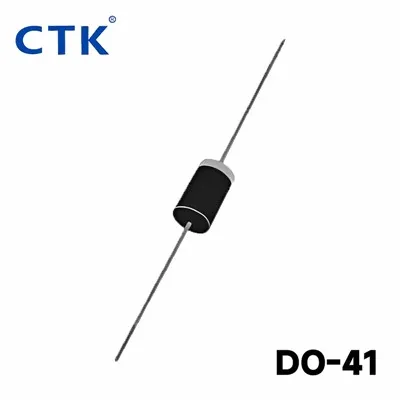
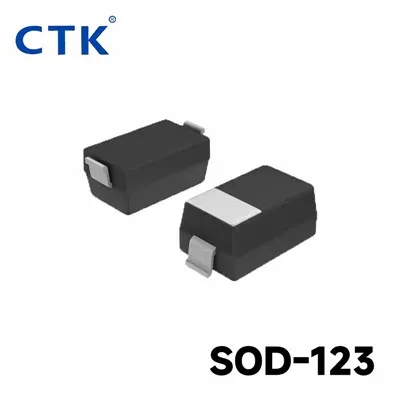
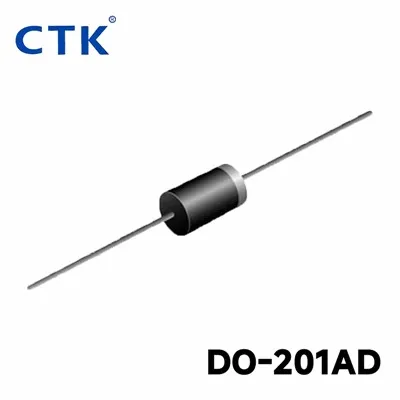
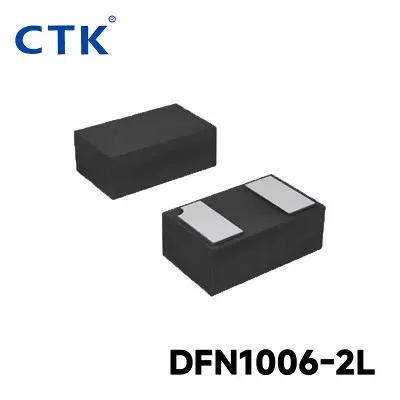
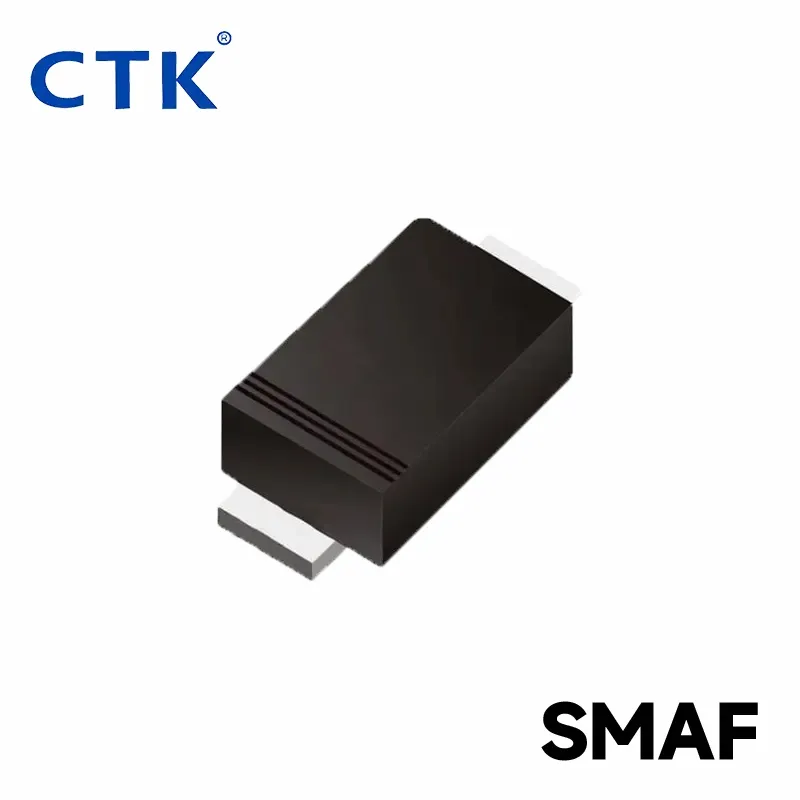
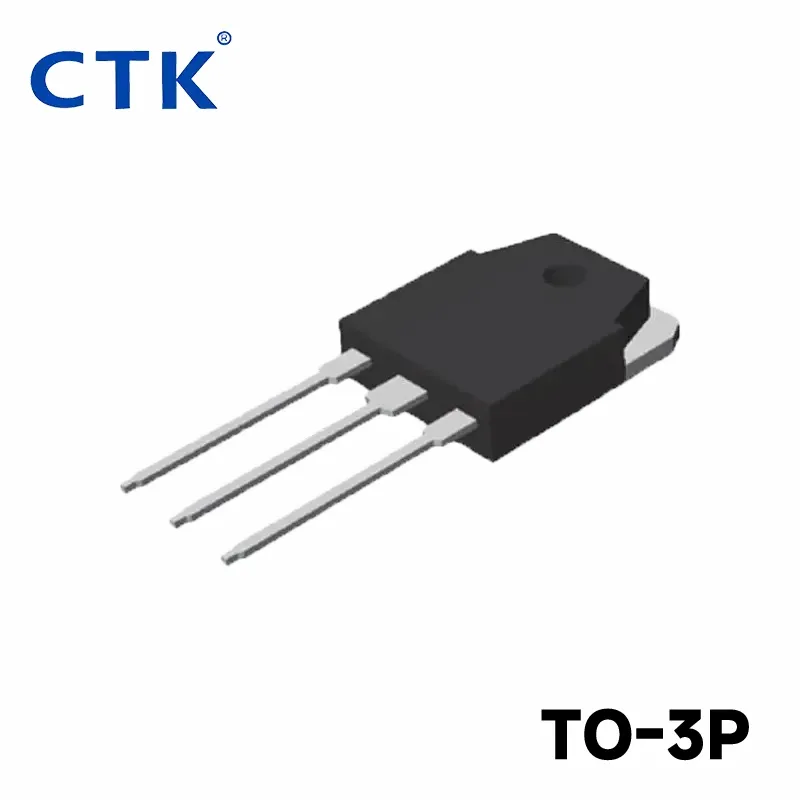
Now, let’s talk about how our SMC fast recovery diodes stack up here. We’ve got a range of surface mount superfast recovery rectifiers with V_RRM ratings from 50V all the way to 600V, so there’s something for every application. If you’re working on a small consumer electronics PCB with limited space, maybe our SMAF Fast Recovery Diodes for Space-Saving Designs are a good fit—they’re even smaller than standard SMC, great for compact gear. If you need higher current through-hole alternatives, wait, we’ve got through-hole too, like DO-41 Fast Recovery Diodes that are solid for lower-power apps. Or if you need something super tiny for SMD boards, check out our SOD-123FL Fast Recovery Diodes for Compact Rectification. For higher power through-hole, we’ve got TO-3P and TO-247 options too—those are perfect for industrial inverters or motor drives.
Wait, but back to V_RRM specifically: every one of our SMC fast recovery diodes has their V_RRM clearly listed on the product page, and we also provide a spec sheet with temperature derating curves, so you don’t have to guess. We’ve tested these diodes for thousands of repetitive reverse cycles to make sure their V_RRM is accurate, no cutting corners. Unlike some cheaper diodes out there that fudge their specs, our numbers are lab-tested, so you can trust them.
Let me also clear up another common misconception: V_RRM is only for reverse bias, right? So if your diode is in forward bias, this spec doesn’t matter. But no—most circuits alternate between forward and reverse bias, especially in switching applications. The reverse recovery time (t_rr) is what makes fast recovery diodes useful, and that’s directly related to their ability to handle repetitive reverse voltage. If your V_RRM is too low, the reverse recovery current spikes get bigger, which can cause electromagnetic interference (EMI) in your circuit too. So it’s not just a reliability issue—it’s a performance one too. Too low V_RRM = more noise, which can mess with other components on your PCB.
So how do you calculate the right V_RRM for your design? Let’s break it down step by step:
- Figure out the peak reverse voltage your circuit will generate. For AC circuits, that’s V_rms * sqrt(2). For switching circuits, it’s the voltage across the diode when it’s in reverse during the off cycle.
- Add a safety margin—we recommend at least 20-50% extra, depending on your application. If it’s a critical medical device or automotive part, go higher (50-100%). For a low-budget toy, maybe 20% is enough, but don’t skip it.
- Factor in your operating frequency and ambient temperature. If you’re running at high frequency or high temp, derate the V_RRM as per the spec sheet’s curves.
- Match it to the diode package. SMC is great for space, but make sure the package can handle your current too—V_RRM doesn’t mean jack if the diode can’t handle the forward current.
Now, if you’re still not sure which SMC fast recovery diode to pick, our team is here to help. We’ve got engineers who know these diodes inside and out, and can walk you through calculating the right V_RRM for your specific circuit. We supply everything from low-power consumer SMC diodes to high-voltage superfast recovery rectifiers for industrial use. Whether you need a single sample to test a prototype or a bulk order for mass production, we’ve got you covered. Our products are all made with high-quality silicon, so you don’t have to worry about V_RRM failing you when you’re scaling up production.
Wait, let’s circle back to that customer I mentioned earlier. They ended up switching to our SMC diodes with a 50V V_RRM, and not only did the field failures stop, but their EMI levels dropped too, because the reverse recovery current spikes were lower with the higher V_RRM rated diode. That’s the thing—getting the V_RRM right isn’t just about preventing diode failure, it’s about making your whole circuit work better.
I know spec sheets can be overwhelming, especially when you’re juggling 10 different parameters (forward current, reverse recovery time, V_F, V_RRM…), but V_RRM is one of the most important ones for fast recovery diodes. If you cut corners here, you’ll end up with product returns, field issues, and frustrated customers. As a supplier, that’s the last thing I want for you, which is why we make sure our SMC fast recovery diodes have precise, reliable V_RRM ratings, and we’re always here to help you pick the right one.
If you’re working on a new design and need to pick up samples, or if you have questions about which diode has the right V_RRM for your project, get in touch with our team. We can also send you spec sheets, performance data, and even application notes to make your design process easier. Don’t waste time guessing—let us help you get the right SMC fast recovery diode with the correct repetitive peak reverse voltage for your needs.
References:
- "Fast Recovery Diode Basics and Application Considerations", Electronic Design, 2022.
- "Surface Mount Diode Package Characteristics for Power Applications", Power Electronics Technology, 2021.
- "Derating Guidelines for Semiconductor Devices", Semiconductor Industry Association, 2020.