





If you’ve ever designed a circuit with surface-mount diodes, chances are you’ve encountered the SMC rectifier diode—one of the most ubiquitous general-purpose silicon rectifiers on the market. I’ve been supplying these components for over a decade, and one question I get asked more than any other is: “What’s the maximum reverse voltage of an SMC rectifier diode?” It’s a fair question, too. Reverse voltage rating is non-negotiable for diode selection; exceed it, and you’re looking at component failure, circuit damage, or even safety hazards. Let’s break this down, from the basics of how SMC diodes work to the real-world specs you need to trust, all through the lens of a supplier who’s walked through hundreds of design projects with customers.
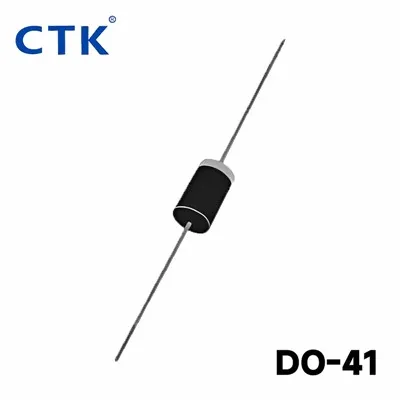
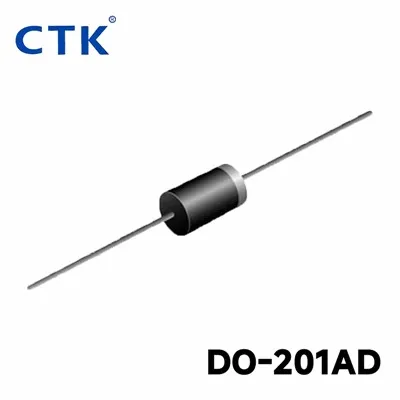
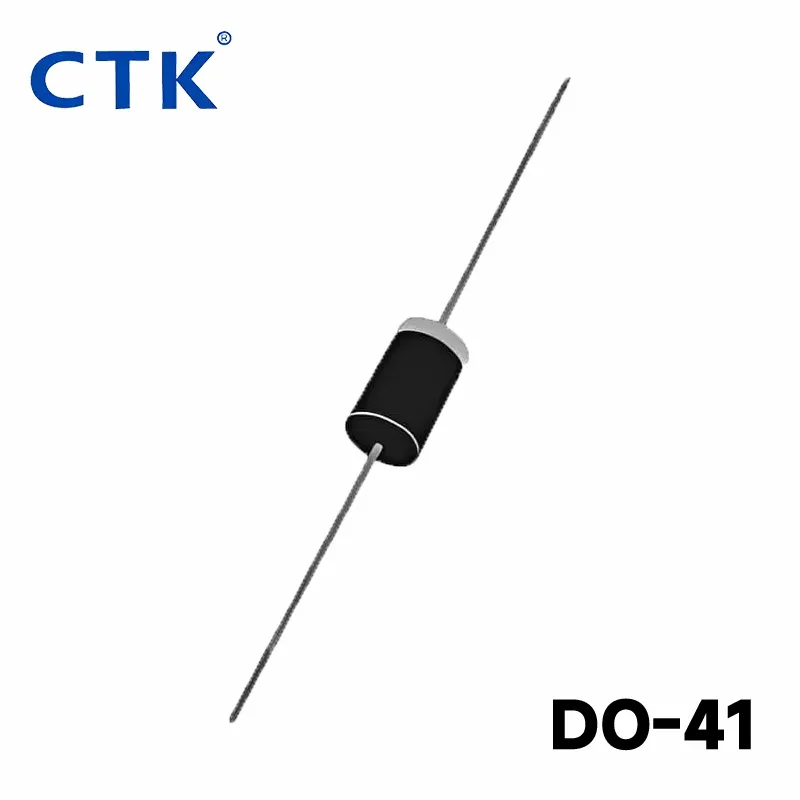
First, let’s ground ourselves in what an SMC rectifier is. SMC stands for Surface-Mount Device (SMC) package, specifically a DO-214AB form factor, distinct from through-hole options like the DO-201AD Rectifier Diodes General Purpose Rectifier or DO-41 Rectifier Diode. What makes SMC diodes popular is their compact, flat package that’s easy to assemble on modern PCBs—no through-hole leads to cut or bend, which speeds up production for everything from consumer electronics to industrial control boards. But their key job, as rectifiers, is to convert alternating current (AC) to direct current (DC) by allowing current to flow in one direction, and blocking it in the reverse. That reverse-blocking ability is where maximum reverse voltage comes in.
So, what is maximum reverse voltage, exactly? In engineering terms, it’s the peak inverse voltage (PIV) or reverse breakdown voltage (V_RRM) that a diode can withstand without undergoing avalanche breakdown. Avalanche breakdown is when the reverse voltage is high enough to knock electrons loose from the silicon atoms, creating a flood of charge carriers that lets current flow backward—something we don’t want in a rectifier, because it defeats the whole purpose of blocking reverse current. Exceeding V_RRM leads to thermal runaway, and the diode dies.
Now, here’s the thing: the maximum reverse voltage of an SMC general-purpose silicon rectifier isn’t a one-size-fits-all number. It depends on the specific part number, the manufacturer’s design, and even operating conditions like temperature. Over the years, I’ve seen customers assume all SMC diodes are the same, then run into issues because they grabbed the wrong spec. Let’s walk through the most common SMC general-purpose rectifiers we supply, and their standard maximum reverse voltage ratings.
The most popular SMC general-purpose rectifiers are rated for 50V, 100V, 200V, and 400V maximum reverse voltage. For low-voltage applications—like small 12V DC power supplies, automotive accessory circuits, or LED drivers—the 50V and 100V SMC parts are go-tos. I recently worked with a customer building portable Bluetooth speakers who originally used a through-hole diode, but switched to SMC to save board space. They initially ordered a 40V SMC diode, but when testing revealed voltage spikes up to 35V during power-on, I advised them to step up to a 50V rated SMC. That small adjustment prevented a batch of potential failures before they hit the assembly line.
For medium-voltage applications, like industrial control circuits running on 24V or 48V DC, 200V SMC rectifiers are standard. We also supply higher-voltage SMC parts for equipment that handles 120V or 240V AC input, which need rectifiers rated for 400V maximum reverse voltage to account for the peak voltage of the AC line (since 120V AC has a peak of ~170V, so a rectifier rated for 200V would leave too little headroom).
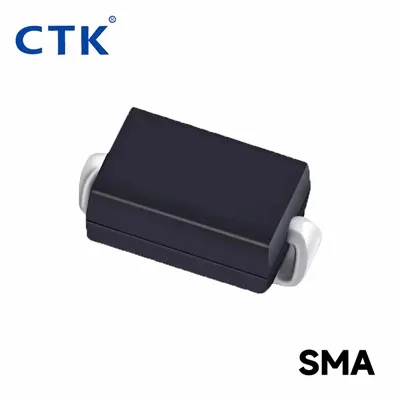
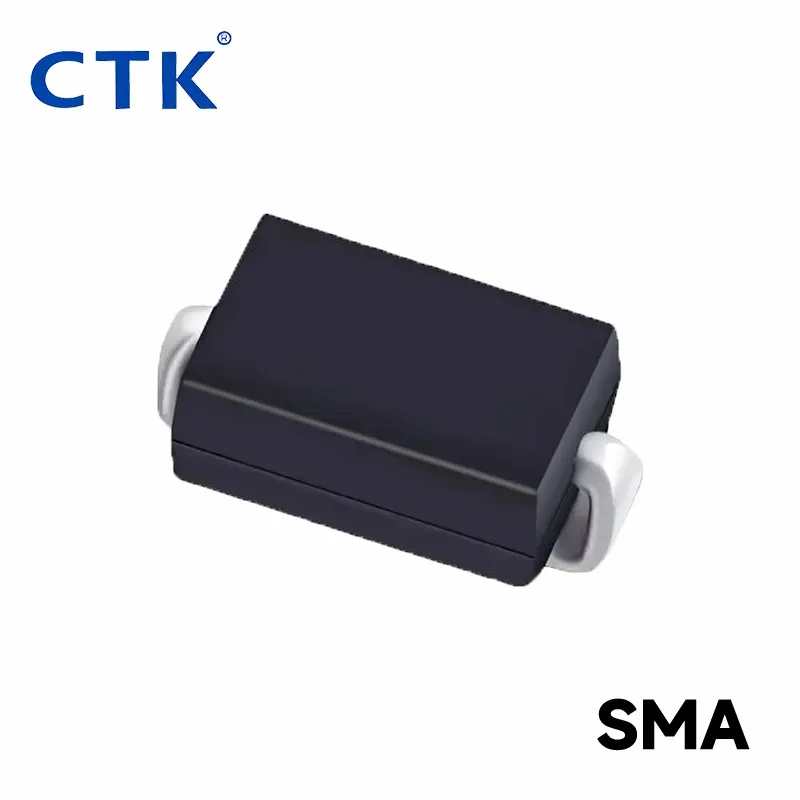
It’s important to contrast SMC diodes with similar packages to avoid confusion. For example, SMA Rectifier Diodes Surface Mount General Purpose Silicon Rectifier parts are smaller SMD packages, usually with lower current ratings, while SMB Rectifier Diodes Surface Mount General Purpose Silicon Rectifier parts are slightly larger than SMC, often with higher current handling, though both have their own voltage ratings. We also carry R-6 Rectifier Diodes for High-Current Applications for projects that need more than the typical 2A or 3A that most SMC general-purpose parts offer.
Now, let’s talk about common misconceptions I hear from design engineers. One big one is that the maximum reverse voltage is fixed regardless of operating temperature. That’s not true. As temperature rises, the silicon in the diode becomes more conductive, so the reverse breakdown voltage drops. For example, a 100V SMC diode might have a V_RRM of 100V at 25°C, but at 125°C (a common operating temperature inside enclosures or near power components), that number can drop to 90V or lower. That’s why it’s critical to look at the datasheet’s temperature derating curve, not just the room-temperature spec. I always advise customers to derate reverse voltage by at least 10-15% for applications operating at high temperatures, just to be safe.
Another mistake is confusing maximum reverse voltage with continuous reverse voltage. The maximum reverse voltage is a peak rating—meaning it’s the highest voltage the diode can withstand for short periods, like transient voltage spikes. Continuous reverse voltage is lower, and that’s the voltage the diode can handle indefinitely. For rectifier applications, the continuous reverse voltage should be at least equal to the peak operating voltage of your circuit. For example, if your circuit has a peak AC voltage of 150V, you need a rectifier with a V_RRM of at least 150V, but I always recommend going higher to account for spikes—hence why 170V peak AC circuits often use 200V rated diodes.
Let’s get specific about the SMC general-purpose rectifiers we supply. Most of our standard SMC rectifiers are from leading manufacturers and have fully documented specs. Our entry-level SMC 50V parts (part numbers like SMC50) have a maximum reverse voltage of 50V, a forward current rating of 2A, and a forward voltage drop of ~0.7V at 1A forward current. Our mid-range SMC100 parts are 100V, 2A, same forward specs. For higher voltage, SMC200 is 200V, SMC400 is 400V, both with the same 2A current rating, perfect for general-purpose rectification.
Wait, but what about when you need higher current? As I mentioned earlier, standard SMC general-purpose rectifiers are mostly 2A, but we also offer higher-current SMC variants up to 5A, which have proportionally higher maximum reverse voltage. Those parts are used in power supplies for small appliances and DC-DC converters. I had a customer a few months back working on a 10A power supply for a 3D printer who initially tried to use standard SMC diodes, but they overheated under load. We suggested our higher-current SMC5A rectifiers, which not only handle the current but also have the same reverse voltage ratings, so they fit the design without needing to rework the board’s footprint.
Now, why does this matter for you as a designer? Choosing the right maximum reverse voltage is the difference between a reliable circuit and a costly failure. I’ve seen projects get held up because the wrong diode was used, leading to 20% failure rates in testing. That’s why at our company, we don’t just sell diodes—we help customers select the right part for their specific application. If you’re working on a project, send us your circuit’s peak operating voltage, operating temperature, and current needs, and we can point you to the exact SMC rectifier with the right maximum reverse voltage.
Another point to consider is the difference between general-purpose SMC rectifiers and specialty diodes. For example, Zener diodes are designed for reverse breakdown, but that’s not what we use for rectification. SMC general-purpose silicon rectifiers are optimized for forward conduction at low voltage drop and robust reverse blocking at their rated V_RRM. They’re not designed for voltage regulation, so don’t use them for that purpose—that’s a common mistake that leads to reverse voltage issues.
Let’s also talk about testing. When we receive batches of SMC rectifiers from manufacturers, we perform reverse voltage testing to make sure the actual spec matches the datasheet. We’ve had a few instances where a batch had a slightly lower V_RRM than advertised, which we caught before shipping to customers. That’s why quality control is key when buying diodes—especially from a supplier you can trust. We publish all test results for our bulk orders, so customers can verify the performance of the diodes they receive.
If you’re designing a circuit and still unsure about what maximum reverse voltage you need for your SMC rectifier, here’s a quick checklist:
- Calculate the peak AC or DC operating voltage of your circuit. For AC input, multiply the RMS voltage by 1.414 to get the peak.
- Add a 20-30% safety margin to that peak voltage to account for transients and temperature derating.
- Match that margin to the available SMC rectifier reverse voltage ratings (50V, 100V, 200V, 400V, etc.).
- Confirm the forward current rating of the diode matches your circuit’s current needs.
For example, if you have a 12V RMS AC circuit (peak voltage ~17V), a 20% safety margin brings you to ~20.4V. That means a 50V rated SMC diode is more than enough, but if your circuit operates at 100°C, you might need to step up to 100V to account for the temperature derating.
I’ve spent years working with customers across industries—from automotive to aerospace to consumer tech—and the number one tip I can share is not to cut corners on reverse voltage. Even if a cheaper diode has the same nominal voltage rating, if it’s not properly tested or rated for your operating conditions, it will fail. That’s why we only source SMC rectifiers from reputable manufacturers, with full compliance to industry standards, and provide datasheets that list every spec clearly, including temperature-dependent reverse voltage.
If you’re looking to source SMC rectifier diodes or want more information about their maximum reverse voltage, we have a team of technical experts ready to help. Whether you need a few samples for prototyping or bulk orders for full production, we can match you to the right part, answer your questions about reverse voltage ratings, and even provide application notes for your circuit design.
Don’t let a wrong reverse voltage choice derail your project. Reach out to our team today to discuss your requirements for SMC general-purpose silicon rectifiers, or browse our product catalog to find the exact part you need.
References
- Electronic Industries Alliance. (2020). Standard for Rectifier Diodes, DO-214 Package Series.
- Semiconductor Components Industries, LLC. (2022). SMC General Purpose Rectifier Diodes Datasheet.
- Johnson, D. H., & Graham, M. (2003). High-Speed Digital Design: A Handbook of Black Magic. Prentice Hall.
- Williams, T. (2007). Circuit Analysis and Design for Electrical Engineers. John Wiley & Sons.