





Can DIODE SOD - 123 High - Efficiency Schottky Diodes be used in radio frequency circuits?
In the dynamic world of electronics, the choice of components can significantly impact the performance of a circuit. One such component that often comes under scrutiny, especially in radio frequency (RF) applications, is the DIODE SOD - 123 High - Efficiency Schottky Diode. As a leading supplier of these diodes, I am frequently asked whether they are suitable for use in RF circuits. In this blog post, we will delve into the characteristics of DIODE SOD - 123 High - Efficiency Schottky Diodes and explore their potential applications in RF circuits.
Understanding Schottky Diodes
Before we specifically discuss the DIODE SOD - 123, it's essential to understand the basics of Schottky diodes. A Schottky diode is a semiconductor diode formed by the junction of a semiconductor with a metal. This metal - semiconductor junction gives Schottky diodes several unique properties compared to traditional PN - junction diodes.
One of the most notable features of Schottky diodes is their low forward voltage drop. Typically, a Schottky diode has a forward voltage drop in the range of 0.15 - 0.45 volts, much lower than the 0.6 - 0.7 volts of a standard silicon PN - junction diode. This low forward voltage drop results in less power loss when the diode is conducting, making Schottky diodes highly efficient.
Another important characteristic is their fast switching speed. Schottky diodes have a very short reverse recovery time, which means they can switch from the conducting state to the non - conducting state (and vice versa) very quickly. This property makes them suitable for high - frequency applications where rapid switching is required.
DIODE SOD - 123 High - Efficiency Schottky Diodes
The DIODE SOD - 123 High - Efficiency Schottky Diodes inherit the general advantages of Schottky diodes and are packaged in the SOD - 123 form factor. The SOD - 123 package is a small, surface - mount package that offers a good balance between size and electrical performance. It is widely used in modern electronic circuits due to its compactness and ease of integration.
These diodes are designed to provide high efficiency in various applications. Their low forward voltage drop ensures minimal power dissipation, which is crucial for battery - powered devices and energy - efficient systems. Additionally, their fast switching speed allows them to handle high - frequency signals effectively.
Suitability for Radio Frequency Circuits
Now, let's address the main question: Can DIODE SOD - 123 High - Efficiency Schottky Diodes be used in radio frequency circuits? The answer is yes, under certain conditions.


Advantages in RF Circuits
- Fast Switching Speed: As mentioned earlier, the fast switching speed of Schottky diodes is a significant advantage in RF circuits. In RF applications, signals often operate at high frequencies, and components need to be able to respond quickly to changes in the signal. The short reverse recovery time of DIODE SOD - 123 High - Efficiency Schottky Diodes enables them to switch states rapidly, making them suitable for use in mixer circuits, parametric amplifiers, and RF switches.
- Low Forward Voltage Drop: The low forward voltage drop of these diodes reduces power loss in the circuit. In RF circuits, power efficiency is crucial, especially in portable devices where battery life is a major consideration. The reduced power loss also helps to minimize self - heating, which can have a negative impact on the performance of the circuit.
- Low Junction Capacitance: Schottky diodes generally have low junction capacitance. In RF circuits, high capacitance can cause signal attenuation and limit the circuit's frequency response. The low junction capacitance of DIODE SOD - 123 High - Efficiency Schottky Diodes allows them to maintain good signal integrity at high frequencies.
Limitations and Considerations
- Reverse Breakdown Voltage: In some high - power RF applications, the reverse breakdown voltage of the diode needs to be carefully considered. The DIODE SOD - 123 High - Efficiency Schottky Diodes may have a relatively lower reverse breakdown voltage compared to some other types of diodes. In applications where high reverse voltages are expected, additional protection circuitry may be required.
- Package Parasitics: Although the SOD - 123 package is compact, it still has some inherent parasitic effects such as lead inductance and package capacitance. These parasitics can affect the performance of the diode at very high frequencies. In high - performance RF circuits, careful layout design and simulation may be necessary to minimize the impact of these parasitics.
Other Related Schottky Diodes
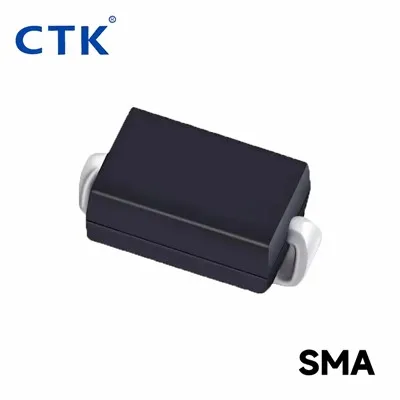
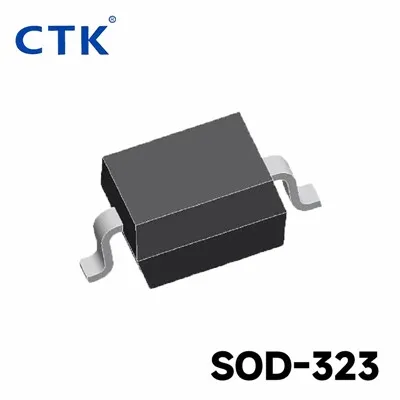
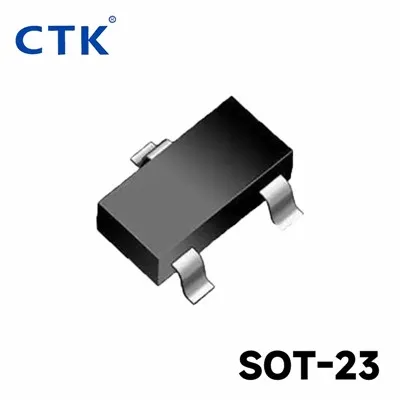
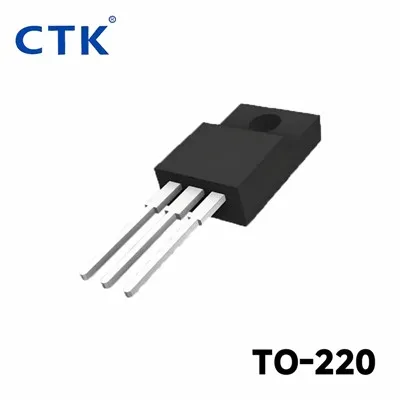
Apart from the DIODE SOD - 123, there are other types of Schottky diodes that are also commonly used in RF and other applications. For example, the SOD - 323 Plastic - Encapsulate Schottky Diodes come in an even smaller package, which can be beneficial for space - constrained designs. The TO - 220AC Schottky Diodes and TO - 220AB Schottky Diodes are designed for higher - power applications and offer better thermal performance. The SMA Schottky Diodes for Surface - Mount Applications are suitable for high - frequency surface - mount circuits, and the Schottky Diode BAT54A SOT23 is a popular choice for low - voltage, high - speed switching applications.
Conclusion and Call to Action
In conclusion, DIODE SOD - 123 High - Efficiency Schottky Diodes can indeed be used in radio frequency circuits, thanks to their fast switching speed, low forward voltage drop, and low junction capacitance. However, designers need to be aware of their limitations and take appropriate measures to ensure optimal performance.
If you are interested in exploring the use of DIODE SOD - 123 High - Efficiency Schottky Diodes in your RF circuits or any other applications, I encourage you to contact me for more detailed product information and technical support. Our team of experts can assist you in selecting the right diodes for your specific requirements and provide guidance on circuit design and implementation. Let's work together to create high - performance electronic circuits.
References
- "Semiconductor Physics and Devices" by Donald A. Neamen.
- "Radio Frequency Integrated Circuit Design" by Robert E. Best.
- Manufacturer's datasheets for DIODE SOD - 123 High - Efficiency Schottky Diodes and related products.