

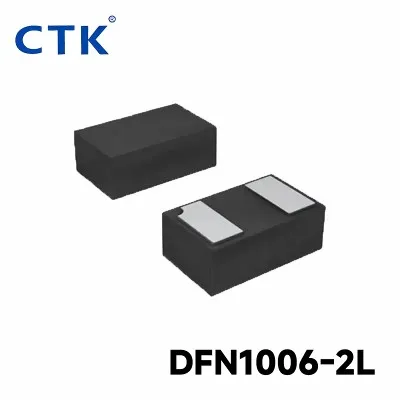



A field-effect transistor (FET) is a semiconductor device that uses the electric field effect of the input circuit to control the current in the output circuit, hence its name.
Because it conducts electricity solely through the majority carriers in the semiconductor, it is also called a unipolar transistor. FET stands for Field Effect Transistor. There are two main types: junction field-effect transistors (JFETs) and metal-oxide-semiconductor field-effect transistors (MOSFETs). Since it conducts electricity solely through the majority carriers in the semiconductor, it is also called a unipolar transistor. It is a voltage-controlled semiconductor device. It has advantages such as high input resistance (10⁷–10¹⁵ Ω), low noise, low power consumption, wide dynamic range, ease of integration, no secondary breakdown phenomenon, and a wide safe operating area. It has become a strong competitor to bipolar transistors and power transistors.
A field-effect transistor (FET) is a semiconductor device that uses the electric field effect of the input circuit to control the current in the output circuit, hence its name.
Because it conducts electricity solely through the majority carriers in the semiconductor, it is also called a unipolar transistor.
FET stands for Field Effect Transistor, abbreviated as FET.